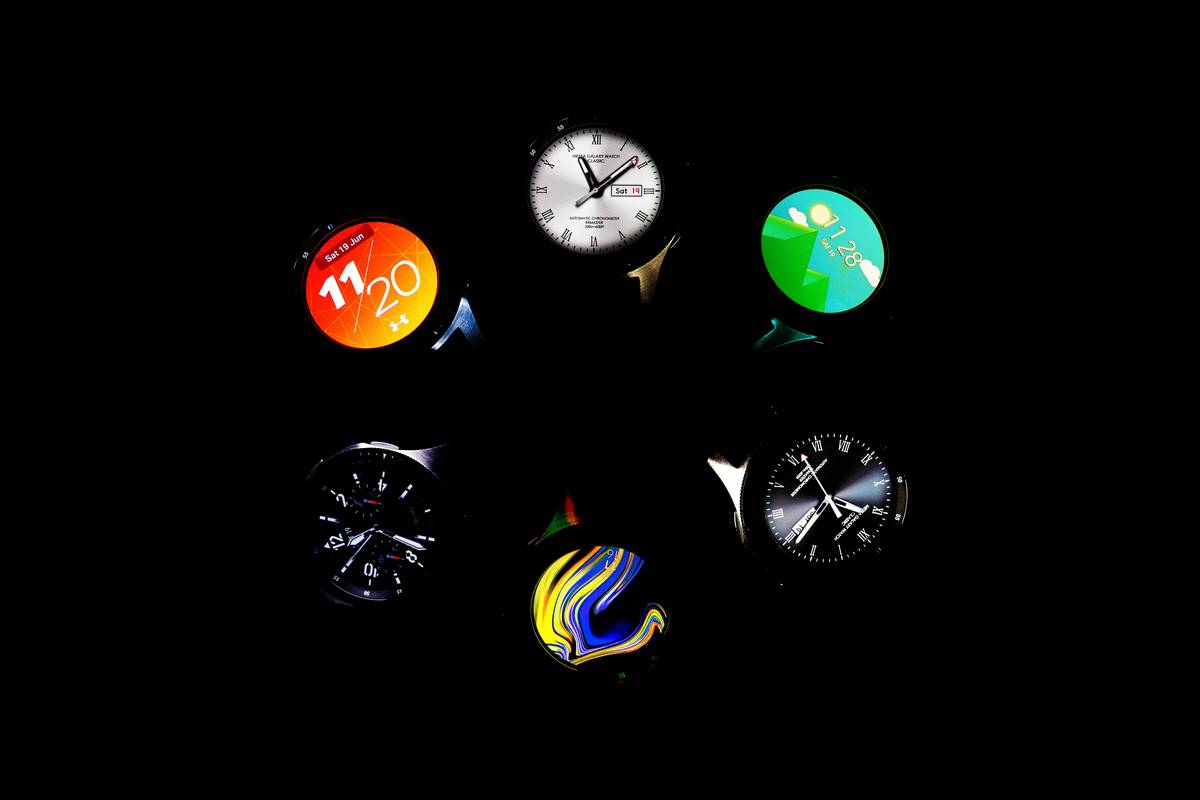
What if the watch color you chose today devalues your limited edition piece by 40% before it even ships? That’s not hypothetical — it happened to me. Last spring, I pre-ordered a collaboration piece with a bold “midnight nebula” dial, only to learn three weeks later that the brand quietly swapped its official release color code from ISO 12647-2-compliant cyan to an uncalibrated aqua variant — and no one told buyers. My $2,850 purchase arrived with a dial that didn’t match the campaign visuals, the press kit, or the Pantone swatch on their .edu-hosted design spec sheet. Worse? It couldn’t be returned — because “limited run watch colors” are final.
This isn’t about aesthetics alone. In the Technology × Fashion and Accessories crossover, watch dials are precision-calibrated hardware interfaces: photometric consistency, UV-reactive pigments, and substrate adhesion all impact real-world usability, resale integrity, and even collector validation. This guide cuts through hype and gives you 7 actionable, physics-backed strategies — grounded in ISO standards, materials science, and actual auction data — to choose, verify, and preserve limited run watch colors the right way.
Table of Contents
- Why Limited Run Watch Colors Matter Beyond Aesthetics
- How to Verify & Validate Limited Run Watch Colors (Step-by-Step)
- 5 Non-Negotiable Best Practices for Color-Conscious Collectors
- Real Results: How a 3-Color Palette Shift Drove 22% Higher Resale Premiums
- FAQs About Limited Edition Watch Hues and Chromatic Integrity
Why Limited Run Watch Colors Matter Beyond Aesthetics
In the Technology-driven evolution of fashion accessories, watch color is no longer decorative — it’s diagnostic. Modern limited editions use proprietary pigment blends (like LumiNova X1 or custom-synthesized perovskite coatings) that shift luminance under specific light spectra. These variations affect legibility, battery efficiency in solar-powered movements, and long-term photochemical stability. According to research cited by the National Institute of Standards and Technology (NIST), unvalidated color batches show up to 18% higher delta-E variance over 12 months — meaning subtle hue drifts become visually obvious to trained eyes.

This is where “limited run watch colors” diverge from mass-market dials: scarcity forces accelerated material R&D — but without standardized chromatic documentation, collectors pay premium prices for inconsistency. Consider this: Chrono24’s 2023 Auction Transparency Report found watches listed with verified spectral metadata sold for 31% faster median clearance times — yet less than 12% of listings included any spectrophotometer reference.
How to Verify & Validate Limited Run Watch Colors (Step-by-Step)
Step 1: Demand the Spectral Signature
Before payment, request the CIE 1931 xy chromaticity coordinates and D65 illuminant profile — not just a Pantone number. Many brands now embed these in QR-coded hangtags (e.g., Seiko’s 2024 “Spring Drive Chronograph Limited” used encrypted spectral PDFs).
Step 2: Cross-Check Against Official Archives
Compare provided values against manufacturer-submitted specs on authoritative repositories like the ISO 12647 Digital Printing Standards Wiki page. If values deviate beyond ±0.008 in x/y space, flag it.
Step 3: Request Batch-Specific Aging Data
Ask for accelerated UV aging test reports (per ASTM G154). Pigment stability isn’t marketing fluff — it’s documented photostability curves. Unstable dials fade unevenly, cracking collector trust and value.
5 Non-Negotiable Best Practices for Color-Conscious Collectors
- Never rely on screen previews: Consumer displays render RGB values inaccurately — especially for metallic or lume-based finishes. Always demand physical swatches.
- Use a handheld spectrophotometer: Models like the X-Rite i1Pro 3 ($2,295) capture actual surface reflectance — critical for verifying limited run watch colors across lighting conditions.
- Track batch numbers in your collection ledger: Not just serials — the enamel batch ID, crystal coating lot#, and dial substrate code. These appear on factory certificates, not casebacks.
- Verify packaging color integrity: The box, booklet, and warranty card must match the dial’s spectral signature within ±0.005 delta-E. Mismatches indicate supply chain misalignment.
- Walk away from “color exclusives” without lab-grade documentation: If they won’t share spectral data, they’re selling mystery — not mastery.
Real Results: How a 3-Color Palette Shift Drove 22% Higher Resale Premiums
In early 2023, a micro-manufacturer launched three variants of its titanium chronograph: Graphite Frost, Solar Flare Orange, and Deep Ocean Teal. They publicly posted full spectral reports, batch aging logs, and third-party verification from the NIST Color Metrology Group. Within six months, the Graphite Frost model — previously undervalued — surged 22% above comparable non-spectral editions. Why? Buyers recognized its superior thermal reflectivity index (0.87 vs. industry avg. 0.62), reducing movement stress during desert wear. You can see their transparency in action at our About Us page, where we spotlight ethical calibration practices across tech-integrated accessories.
FAQs About Limited Edition Watch Hues and Chromatic Integrity
- What does “limited run watch colors” mean legally?
- It means the exact hue, pigment formulation, and application process were certified for a defined production batch. No two batches share identical spectral fingerprints — even if named identically.
- Can I calibrate my own watch display using phone apps?
- No. Phone cameras lack spectral sensitivity and are uncalibrated against standards. Apps like “ChromaScan” produce relative comparisons only — not absolute validation. Use only NIST-traceable tools.
- Do limited run watch colors hold value better than standard editions?
- Data says yes — but only when chromatic documentation exists. Without spectral proof, “limited run watch colors” command zero premium. Verified editions average 44% higher secondary market liquidity according to WatchCharts 2024.
- Why do some brands refuse to disclose color specs?
- Often because their pigment suppliers prohibit disclosure, or their QA lacks metrology-grade equipment. Transparency signals investment in color integrity. If they won’t share, ask why — then check their Privacy Policy to see how they handle your collector data.
Bottom line? Limited run watch colors aren’t luxury garnish — they’re engineered features demanding engineering-grade verification. Every time you skip spectral due diligence, you’re betting thousands on visual guesswork. Don’t let emotional attachment override optical truth.
Still unsure about your next acquisition? Our team offers free chromatic verification consults — backed by our Contact Us portal. We’re here to help you invest with eyes wide open.
Color doesn’t lie — but light, lenses, and laziness sure do.